The American Wellness Revolution: How to Thrive in a Fast-Paced World
Author: RVLNSV PRASAD
Updated On: October 2026
About Us
Author Bio
Editorial Policy
Contact Us
Introduction
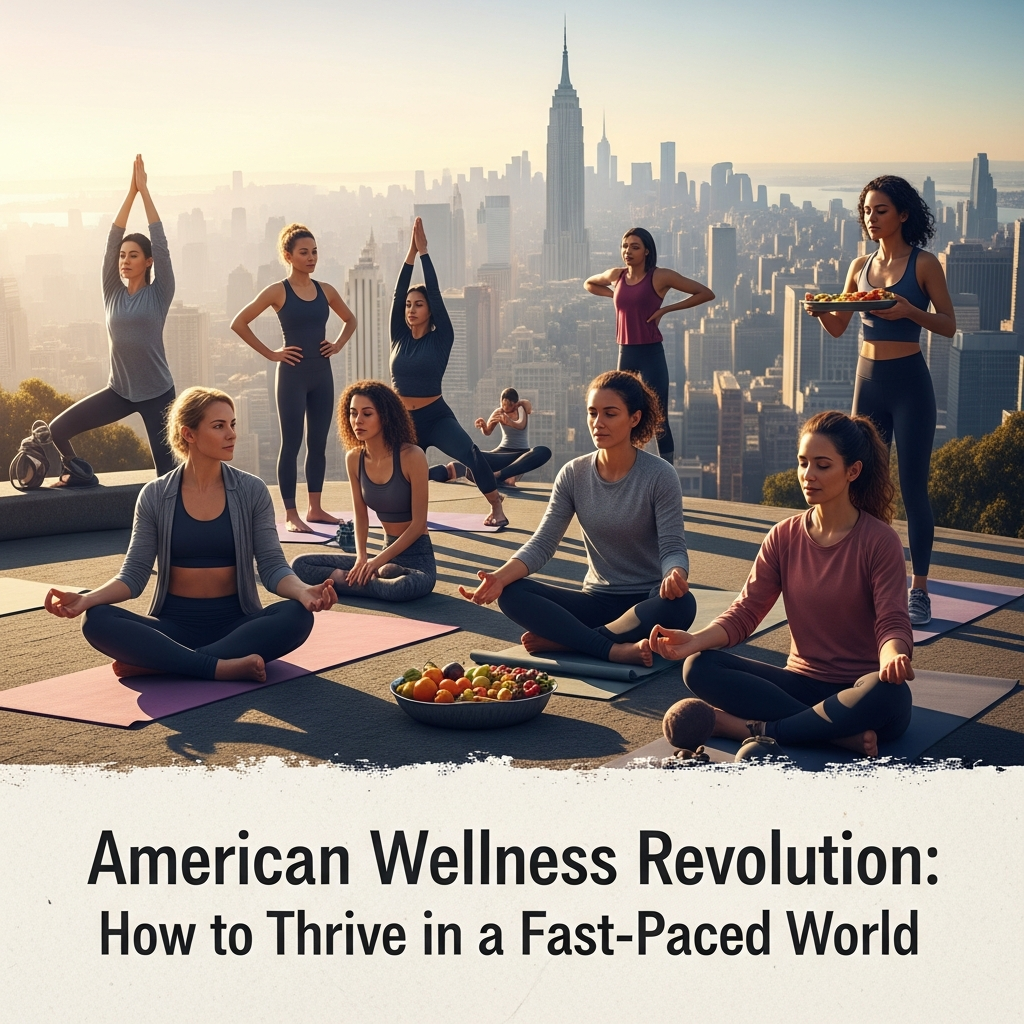
The American Wellness Revolution is not simply about joining a gym, buying a fitness tracker, drinking a green smoothie, or following the latest wellness trend.
It is a broader shift in how people think about health.
Instead of seeing health as something to address only after a problem appears, more people are paying attention to everyday behaviors that influence physical health, mental well-being, sleep, nutrition, movement, relationships, stress, and quality of life.
That whole-person approach has also become more visible in health research. The National Center for Complementary and Integrative Health describes whole-person health as looking beyond individual diseases and considering interconnected biological, behavioral, social, and environmental factors. NCCIH: Whole Person Health
At the same time, the modern wellness conversation needs more science and less hype.
A wellness practice is not automatically healthy because it is natural, expensive, popular on social media, or marketed as a quick solution.
That is where this article takes a different approach.
The goal is not to tell every American to follow the same routine. It is to explain what the evidence supports, what deserves caution, and how ordinary people can build a healthier lifestyle that survives real workdays, family responsibilities, financial limitations, busy schedules, and imperfect weeks.
Quick Answer: What Is the American Wellness Revolution?
The American Wellness Revolution can be understood as the growing emphasis on proactive, whole-person approaches to health in everyday American life.
It includes several connected areas:
- Nutritious and sustainable eating
- Regular physical activity
- Adequate sleep
- Mental and emotional health
- Stress management
- Social connection
- Preventive health care
- Healthy work and home environments
- Responsible use of health technology
- Sustainable habits rather than extreme short-term programs
The important point is that wellness does not require perfection.
A healthy lifestyle can be built from ordinary behaviors repeated consistently.
The National Institute of Diabetes and Digestive and Kidney Diseases notes that healthy eating, physical activity, adequate sleep, and stress management can all contribute to healthier living and weight management. NIDDK: Healthy Eating and Physical Activity for Life
Key Takeaways
- The American Wellness Revolution is broader than fitness and dieting.
- Whole-person health considers physical, mental, behavioral, social, and environmental factors.
- Regular movement does not have to mean long gym sessions.
- A sustainable eating pattern matters more than a fashionable diet.
- Sleep should be treated as part of health rather than wasted time.
- Social connection is a genuine component of well-being.
- Wellness technology can help, but tracking everything is not necessary.
- Expensive wellness products are not required for many healthy behaviors.
- The best routine is one that can survive a difficult day.
- Evidence should guide wellness decisions rather than marketing claims.
Why America Is Rethinking Wellness
Modern life creates a difficult contradiction.
Technology makes many tasks easier, yet people can spend long periods sitting. Food is widely available, yet choosing nutritious options can be difficult. Communication is constant, yet people can still feel socially disconnected.
Work can be performed from almost anywhere, but the boundary between work and personal time can become unclear.
The result is that wellness increasingly has to address more than calories or exercise.
The whole-person approach recognizes that health is influenced by interacting factors. NCCIH notes that biological, behavioral, social, and environmental factors can all influence the path toward health or disease. NCCIH: Whole Person Health
This changes the question from
“What supplement should I take?”
to:
“What parts of my daily life are helping or hurting my health?”
That is a much more useful question.
The American Wellness Movement Is Bigger Than Diet and Exercise
Diet and physical activity remain central to good health, but they are not the complete picture.
A person can eat reasonably well and exercise regularly while still struggling with chronic sleep deprivation, overwhelming stress, isolation, or an unhealthy work environment.
Likewise, someone may have limited time or physical ability and still make meaningful improvements through sleep, food choices, social relationships, stress management, and appropriate movement.
The American wellness movement is therefore becoming less about creating a perfect body and more about creating a healthier life.
This distinction matters.
A wellness plan should support your life rather than become another source of pressure.
Nutrition: Moving From Diet Rules to Sustainable Eating
One of the most important changes in modern wellness is the move away from rigid food rules.
Instead of dividing every food into “good” or “bad,” a sustainable approach looks at the overall eating pattern.
A balanced eating pattern can include:
| Food category | Practical examples |
|---|---|
| Vegetables | Leafy greens, carrots, tomatoes, peppers, broccoli |
| Fruits | Apples, berries, oranges, bananas |
| Whole grains | Oats, brown rice, whole-grain bread |
| Protein foods | Beans, lentils, eggs, fish, poultry, tofu, nuts |
| Dairy or alternatives | Yogurt, milk, fortified alternatives |
| Healthy fats | Nuts, seeds, avocado, selected plant oils |
| Water | Main beverage for everyday hydration |
NIDDK recommends a healthy eating pattern that includes vegetables, whole fruits, whole grains, protein foods, and appropriate dairy or fortified alternatives while limiting excess added sugars, saturated fat, and sodium. NIDDK: Eating and Physical Activity to Lose or maintain Weight
The “Add Before You Subtract” Wellness Rule
Here is one practical idea I recommend.
Before telling yourself what you must eliminate, ask what you can add.
Add:
- One vegetable to lunch
- Fruit to breakfast
- Beans or lentils to a meal
- Water instead of one sugary drink
- A protein source to a low-protein meal
- Whole grains more often
- A planned snack when long gaps between meals lead to overeating
This approach can feel less restrictive than beginning with a long list of forbidden foods.
What About Ultra-Processed Foods?
This is an area where wellness advice needs nuance.
Research has found associations between higher consumption of ultra-processed foods and several adverse health outcomes. A large 2024 umbrella review found associations involving cardiovascular, metabolic, mental health, and mortality outcomes, although the certainty of evidence varied considerably across outcomes. PubMed: Ultra-Processed Food Exposure and Adverse Health Outcomes
More recent research continues to examine the issue. A 2026 umbrella review reported associations between higher ultra-processed food consumption and several chronic health outcomes, while also emphasizing that the strength of evidence is heterogeneous. PubMed: 2026 Updated review of Ultra-Processed Foods
That does not mean every packaged food is dangerous.
A better people-first strategy is to gradually make minimally processed and nutrient-dense foods easier to choose while avoiding an all-or-nothing mindset.
Movement: The New Definition of Exercise
For years, many people associated exercise with a gym, running shoes, machines, or long workouts.
That definition is unnecessarily narrow.
Brisk walking, cycling, dancing, swimming, active household tasks, recreational sports, and resistance exercises can all contribute to physical activity.
Current U.S. guidance recommends that adults aim for at least 150 minutes of moderate-intensity aerobic activity each week and muscle-strengthening activities on at least two days a week. U.S. Physical Activity Guidelines
But there is an important practical point.
You do not have to start at 150 minutes.
NIDDK specifically notes that inactive people can begin with smaller amounts and gradually build toward the recommended level. Even short periods of activity can count. NIDDK: Tips for Starting Physical Activity
The Five-Minute Entry Point
If someone says, “I don’t have time to exercise,” the answer should not automatically be a 60-minute workout plan.
Try five minutes.
Walk around the house.
Walk outside.
Climb stairs if appropriate.
Do gentle mobility exercises.
perform a few bodyweight movements if they are safe for you.
Five minutes is not a replacement for meeting recommended activity levels, but it can be a useful starting point.
The habit can then grow.
Sleep Is Not a Luxury
A wellness routine that ignores sleep is incomplete.
Sleep supports physical and mental health, yet modern schedules can make adequate rest difficult.
The problem is not simply staying up late once in a while. Repeatedly inadequate sleep can become part of a person’s lifestyle.
NIMH recommends making sleep a priority and maintaining a regular sleep schedule as part of caring for mental health. It also recommends regular physical activity, healthy meals, relaxation activities, and setting realistic priorities. NIMH: Caring for Your Mental Health
The Wellness “Closing Shift”
One simple strategy is to think of the last part of the day as a closing shift.
Instead of trying to transform your entire evening, gradually reduce activities that keep your brain engaged.
You might:
- Finish unnecessary work messages.
- Prepare what you need for tomorrow.
- Dim the environment.
- Put the phone away for a period.
- Read, stretch, or perform another relaxing activity.
- Go to bed at a reasonably consistent time.
The goal is not a perfect bedtime routine.
The goal is to make sleep easier to protect.
Mental Health Belongs at the Center of Wellness
A modern wellness article should not treat mental health as an optional extra.
NIMH describes mental health as including emotional, psychological, and social well-being. It also emphasizes self-care practices such as exercise, healthy eating, adequate sleep, relaxation activities, and realistic goal-setting. NIMH: Caring for Your Mental Health
This does not mean lifestyle habits can replace professional treatment.
They cannot.
Someone experiencing persistent depression, severe anxiety, suicidal thoughts, substance-use problems, or another mental health condition may need professional evaluation and treatment.
Wellness should support health care, not compete with it.
Social Connection Is a Wellness Habit Too
This is one of the most overlooked parts of the wellness conversation.
People often track steps, calories, sleep, heart rate, or workouts while forgetting something much harder to measure:
connection.
The CDC notes that social connection can support longer, healthier lives and is associated with better stress management, sleep, physical activity, eating habits, and mental health. CDC: Social Connection and Health
That makes connection a practical wellness behavior.
You do not necessarily need a large social network.
Try:
- Calling a family member
- Walking with a friend
- Eating a meal with someone
- Joining a community activity
- Checking on an older relative
- Participating in a local group
- Having a regular conversation without phones
The “Connection Before Consumption” Idea
Here is another people-first strategy.
When stress creates the urge to automatically scroll, shop, snack, or consume entertainment, pause and ask:
“Would connection help me more right now?”
Sometimes the answer will be no.
You may genuinely need rest.
But sometimes a five-minute conversation is more restorative than another 30 minutes of scrolling.
Wellness Technology: Tool, Not Master
Wearables and health apps can make health behaviors more visible.
A tracker might remind someone to stand.
An app may record exercise.
A sleep device may reveal patterns.
Telehealth can make certain health services more accessible.
But technology has a limitation.
Measurement is not the same as health.
A person can become so focused on numbers that the numbers themselves create stress.
The useful question is
“Does this technology help me make a healthier decision?”
- If yes, keep it.
- If checking the number repeatedly creates anxiety without improving behavior, step back.
The American Wellness Revolution should not become a competition to collect the most health data.
A Better Wellness Technology Rule
Use technology for:
Awareness → Decision → Action
Not:
Tracking → Tracking → Tracking
for example:
Your watch shows that you have been inactive.
The useful response is not staring at the number again.
It is standing up and moving.
That is when data becomes behavior.
The Workplace Wellness Problem
Work is one of the environments where wellness habits can succeed or fail.
A person may intend to exercise after work but spend the entire day sitting, skip lunch, work through stressful meetings, and remain connected to messages late at night.
That is why individual discipline is not always enough.
The environment matters.
A practical workplace wellness approach can include:
| Challenge | Simple response |
|---|---|
| Long sitting | Short movement breaks |
| Skipped meals | Planned lunch |
| Constant notifications | Notification boundaries |
| Stressful workload | Realistic priorities |
| Poor hydration | Water within reach |
| Social isolation | Shared lunch or brief conversation |
| Evening work | Defined shutdown time |
This is one reason whole-person health is useful: it considers the conditions in which people actually live and work.
The Most Important Wellness Habit: Make the Healthy Choice Easier
One of the strongest ideas from behavior change is that your environment can influence your choices.
NIDDK recommends practical strategies such as keeping healthier foods available, planning shopping, reducing exposure to tempting foods, and setting realistic activity goals. NIDDK: Health Tips for Adults
You can apply the same principle to other habits.
Put walking shoes near the door.
Keep fruit visible.
Prepare vegetables before you are hungry.
Charge the phone away from the bed.
Keep a water bottle where you work.
Put a resistance band somewhere you can see it.
Make the desired behavior easier than the undesired one.
A Unique People-First Strategy: The Wellness minimum
This is one of the most useful ways to make wellness sustainable.
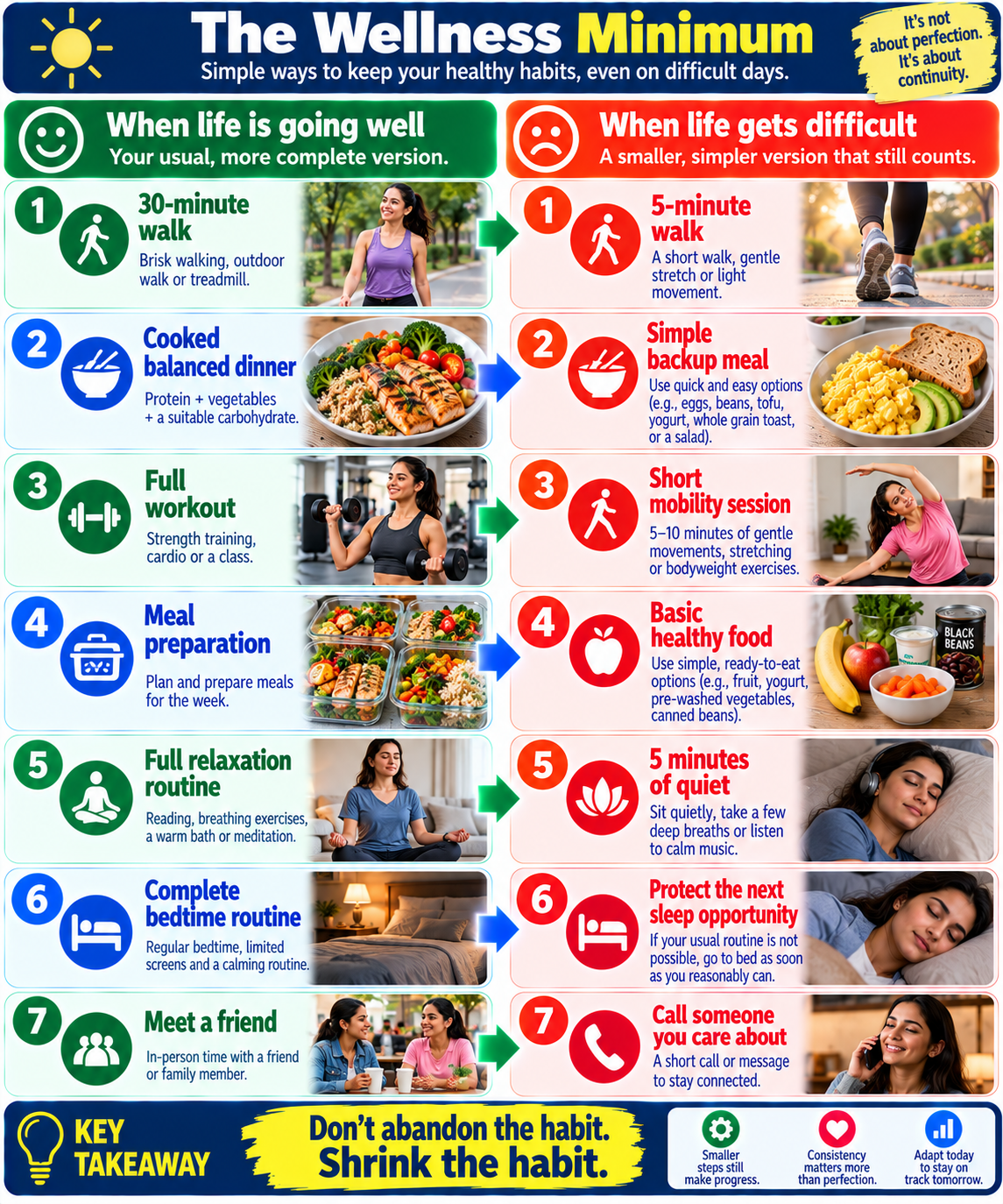
Instead of creating an ideal routine, create two versions:
Normal Day
and
Difficult Day
for example:
| Normal day | Difficult day |
|---|---|
| 30-minute walk | 5-minute walk |
| Cooked dinner | Simple balanced meal |
| Full workout | Short mobility session |
| Meal preparation | Basic healthy backup food |
| Long relaxation routine | 5 minutes of quiet |
| Full sleep routine | Protect the next available sleep opportunity. |
| Social activity | Call one person. |
The goal is not to abandon the habit when life becomes difficult.
Shrink the habit.
This may be one of the most important differences between a wellness plan that looks impressive and one that actually survives real life.
The Wellness Backup Meal System
Busy days are inevitable.
Instead of expecting yourself to cook a perfect meal every day, create backup options.
Level 1: Planned Day
Protein + vegetables + whole grain or another suitable carbohydrate + healthy fat.
Level 2: Busy Day
Eggs, beans, tofu, yogurt, or another convenient protein + fruit or vegetables + an easy carbohydrate.
Level 3: Very Busy Day
Frozen vegetables + canned beans + oats + whole-grain bread or another practical staple.
Level 4: Eating Out
Look for a meal that includes a protein source and vegetables when available, and adjust portions according to your needs.
This is not about creating a perfect diet.
It is about preventing one difficult day from becoming an entire week of abandoned habits.
Weight Management Without the Wellness Hype
Weight is influenced by multiple factors, including food intake, physical activity, sleep, medications, health conditions, environment, genetics, and other biological and social factors.
That is why “just eat less and exercise more” is often an inadequate explanation.
NIDDK notes that healthy eating and physical activity can support weight management, while successful treatment may also involve structured programs, professional support, medications, or surgery when clinically appropriate. NIDDK: Treatment for higher weight and Obesity
The wellness goal should therefore not be to chase a particular body shape.
A better goal is to improve health behaviors and obtain appropriate medical support when needed.
What the Wellness Industry Gets Wrong
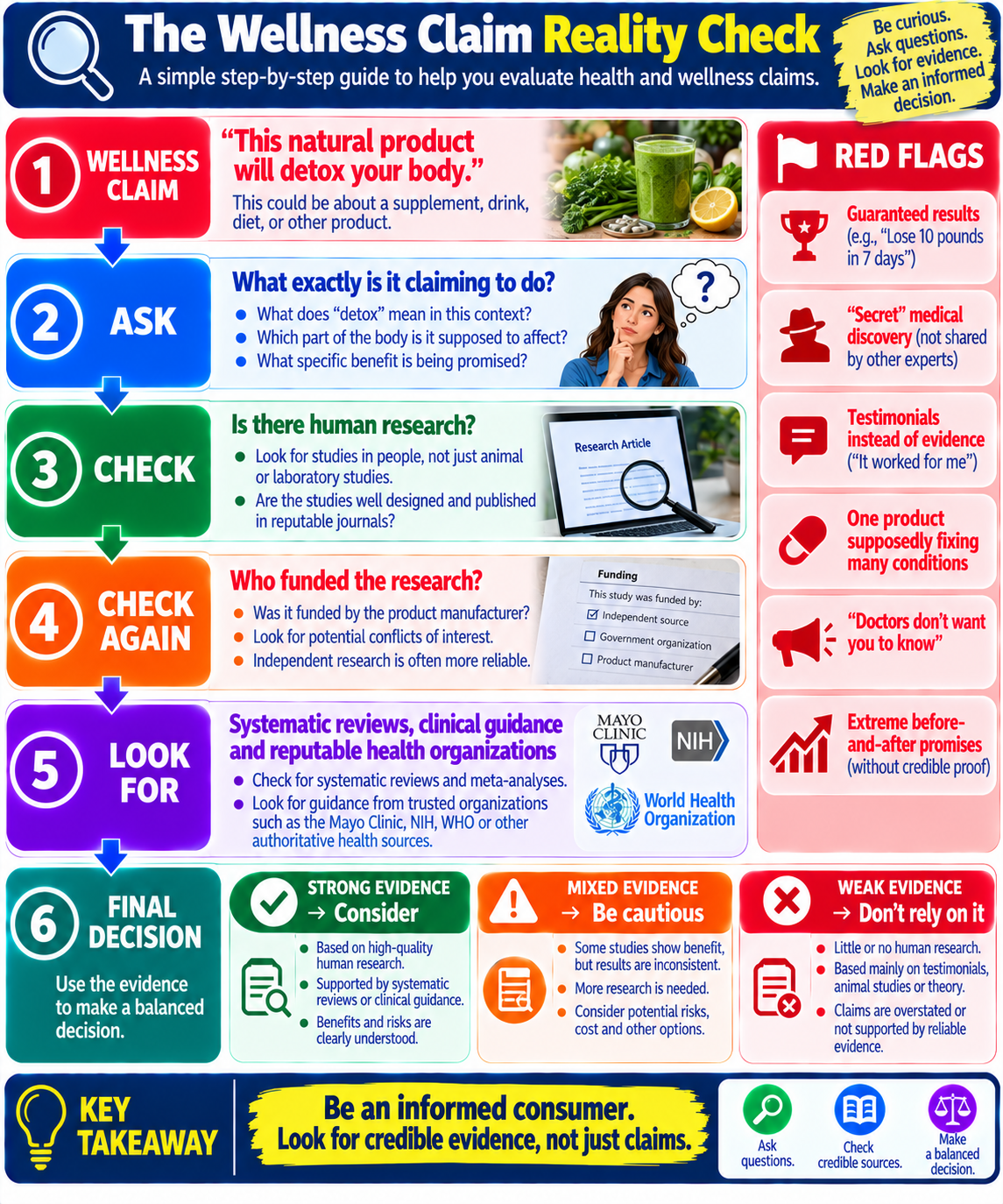
The wellness industry can offer useful products and services, but marketing should never be confused with medical evidence.
Be cautious when a product promises:
- Instant detoxification
- Guaranteed fat loss
- Hormone “resetting”
- Permanent results without effort
- A cure for multiple diseases
- Benefits based only on testimonials
- A secret method that doctors supposedly do not want you to know
A good wellness question is
“What is the evidence, and how strong is it?”
Another important question is
“Who benefits financially if I believe this claim?”
Those questions do not mean every wellness product is useless.
They simply protect the reader from confusing marketing with science.
Natural Does Not Automatically Mean Safe
This deserves special attention.
“Natural” is a description of origin, not a guarantee of safety.
Herbal products can have active ingredients.
Supplements can interact with medications.
High doses of certain nutrients can cause harm.
People with kidney, liver, heart, or other medical conditions may have additional considerations.
therefore, a wellness article should never imply that a natural remedy is automatically appropriate for everyone.
When a supplement or herbal product is being considered for a health condition, discussing it with a qualified healthcare professional is the safer approach.
Latest Research Developments: Wellness Is Moving Toward Whole-Person Health
One of the most important recent developments is that whole-person health is receiving greater attention in mainstream research.
In September 2025, the NIH announced a major initiative focused on whole-person health and function. The project aims to better understand healthy physiological function across interconnected systems rather than studying health only through individual diseases or organs. NIH: Landmark Project on Whole-Person Health and Function
That is significant for the American Wellness Revolution because it reinforces an idea that people have experienced for years:
Sleep, nutrition, activity, stress, relationships, and the physical environment do not exist in completely separate boxes.
Research Is Also Becoming More Careful About Ultra-Processed Foods
The conversation around ultra-processed foods is another rapidly developing area.
A 2025 systematic umbrella review reported evidence linking higher ultra-processed food consumption with several health outcomes, including cardiovascular disease, type 2 diabetes, and mortality, while grading the certainty of evidence differently across outcomes. PubMed: Ultra-Processed Food Consumption and Human Health
In 2025, NIH researchers also reported progress toward using biological markers to estimate ultra-processed food intake, potentially addressing limitations associated with relying entirely on self-reported dietary information. NIH Research Matters: Measuring Ultra-Processed Foods
The lesson is that people should not fear every packaged food.
The lesson is that nutrition research continues to evolve, and wellness advice should evolve with it.
A Simple American Wellness Framework
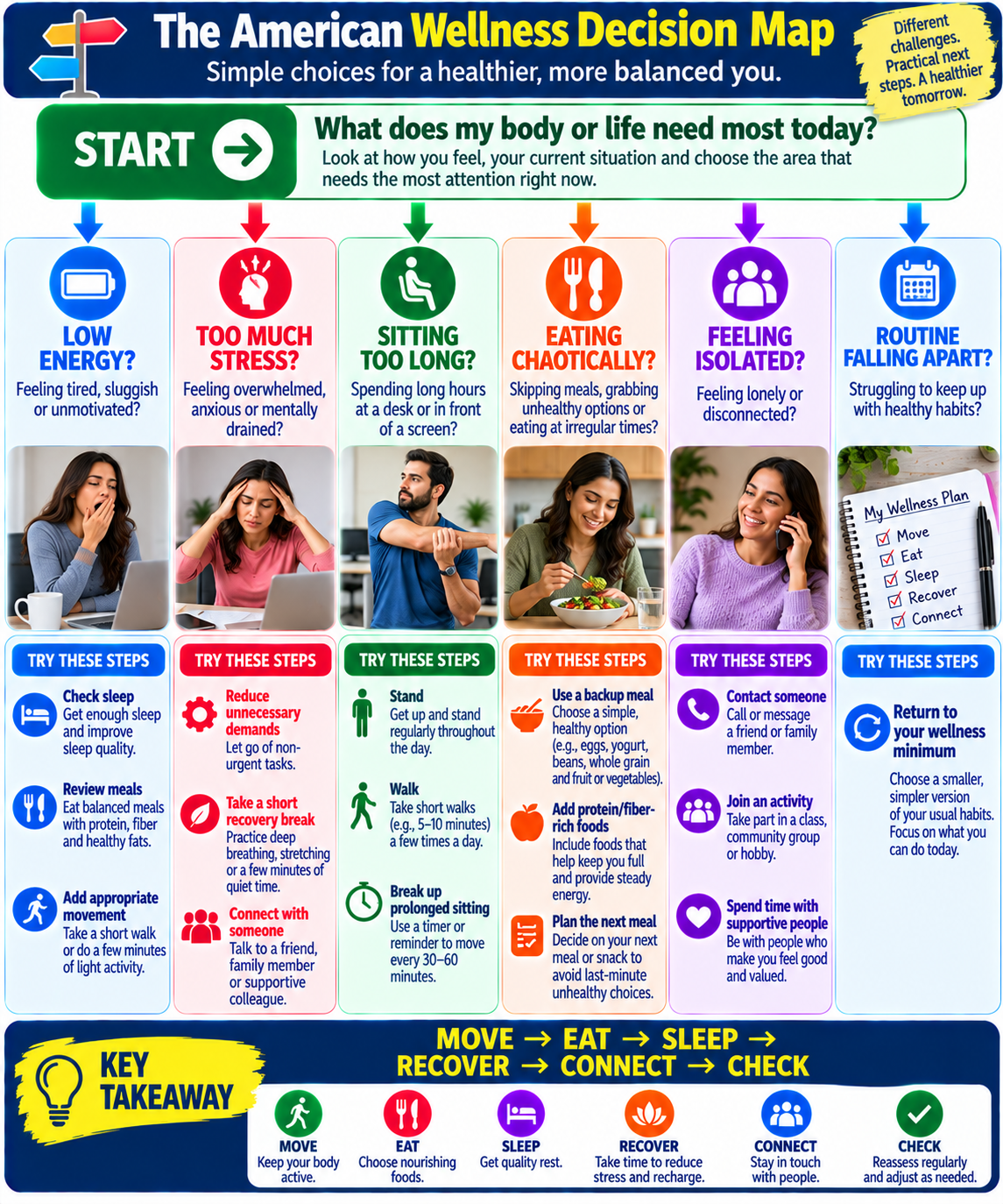
If you feel overwhelmed by wellness advice, use this six-part framework.
1. Move
Find movement you can repeat.
Walking counts.
Strength training counts.
Dancing counts.
Recreational activity counts.
2. Eat
Build meals around nutritious foods you enjoy and can afford.
3. Sleep
Protect regular opportunities for adequate sleep.
4. Recover
Create periods when your body and mind are not being pushed.
5. Connect
maintain meaningful relationships and community involvement.
6. Check
Use preventive health care and professional advice when appropriate.
This framework is intentionally simple.
It is not meant to replace medical care, but rather to make everyday wellness information easier to understand and apply.
A Seven-Day American Wellness Reset
You do not need a 30-day transformation challenge.
Try one week of small experiments.
| Day | Wellness experiment |
|---|---|
| Day 1 | Add one fruit or vegetable to a meal. |
| Day 2 | Take a short walk during a natural break. |
| Day 3 | Create a calmer bedtime routine. |
| Day 4 | Prepare one easy backup meal. |
| Day 5 | Contact someone you care about. |
| Day 6 | Spend less time on unnecessary screen use |
| Day 7 | review which habit felt easiest to continue. |
The final day matters.
Do not ask:
“Did I become healthier in seven days?”
Ask:
“Which behavior fits my life well enough to repeat?”
That question is much more useful.
My Personal Experience With Small Changes
I have learned that wellness becomes much easier when it is treated as a collection of manageable decisions rather than one giant lifestyle transformation.
There have been periods when work and daily responsibilities made healthy routines difficult to maintain.
What helped was not trying to fix everything at once.
A regular walk was easier to maintain than an ambitious exercise schedule.
A simpler meal was more realistic than trying to prepare elaborate healthy recipes every day.
Protecting sleep became more useful than constantly searching for another productivity strategy.
The lesson I took from those experiences is simple:
A healthy habit does not need to be impressive to be valuable.
It needs to be repeatable.
Common Mistakes That Can Undermine Wellness
Mistake 1: Trying to change everything simultaneously
Too many goals create unnecessary friction.
Choose one or two.
Mistake 2: Treating wellness as a shopping list
You do not need a new supplement, device, powder, program, or subscription for every health goal.
Mistake 3: Confusing intensity with effectiveness
More exercise is not automatically better if it creates injury, exhaustion, or burnout.
Mistake 4: Ignoring sleep
A person may exercise intensely while consistently sacrificing sleep.
That is not a complete wellness strategy.
Mistake 5: Believing every social media health claim
Popularity is not evidence.
Mistake 6: Using extreme diets
Extreme restriction can make healthy eating difficult to sustain.
Mistake 7: Measuring everything
Some people benefit from tracking.
Others become stressed by constant measurement.
Choose what helps you.
Mistake 8: Giving up after one difficult day
One restaurant meal, missed workout, late night, or stressful day does not erase your progress.
Return to the next useful decision.
People-First Insight: Build a Wellness Plan for Your Worst Week
This may be the most important idea in the entire article.
Most wellness plans are designed for an imaginary person with unlimited time.
Real people get sick.
Children need attention.
Work becomes stressful.
Travel disrupts routines.
Money becomes tight.
Sleep gets interrupted.
Motivation disappears.
therefore, design your wellness plan for your worst realistic week, not your perfect week.
Ask:
- What healthy food can I prepare in 10 minutes?
- What movement can I do when I am busy?
- What is my minimum sleep-protection routine?
- Who can I call when I feel isolated?
- Which health behaviors are free?
- What can I realistically repeat?
That is where wellness becomes sustainable.
Wellness Does Not Have to be Expensive
Some of the most useful health behaviors require little or no money.
Walking is inexpensive.
Home-based strength exercises can be inexpensive.
Sleeping on a regular schedule costs nothing.
Cooking basic meals can sometimes reduce food costs.
Social connection can be free.
Spending time outdoors can be free.
The challenge is often not the price of the behavior but whether the environment makes that behavior practical.
This is another reason the American Wellness Revolution should be about accessibility rather than luxury.
When Wellness Should Become Medical Care
Wellness practices are not a substitute for diagnosis or treatment.
Seek professional medical advice when you have persistent or concerning symptoms, significant changes in weight without explanation, chest pain, breathing difficulties, severe fatigue, persistent sleep problems, uncontrolled blood pressure or blood sugar, or other symptoms that concern you.
Mental-health symptoms also deserve appropriate care.
If someone is experiencing thoughts of suicide or immediate danger, seek emergency help or a crisis service rather than relying on self-care strategies alone.
People with chronic conditions should also discuss major changes in exercise, diet, supplements, or weight-loss plans with an appropriate healthcare professional.
frequently Asked Questions
What is the American Wellness Revolution?
The American Wellness Revolution describes a broader movement toward proactive, whole-person approaches to health that include nutrition, physical activity, sleep, mental health, stress management, social connection, prevention, and healthy environments.
Is the American Wellness Revolution scientifically supported?
Some parts of the movement are strongly supported by evidence, including regular physical activity, healthy eating patterns, adequate sleep, stress-management strategies, and social connection. Other wellness trends have limited or mixed evidence. The key is to evaluate each practice separately rather than assuming the entire wellness industry is evidence-based.
Is wellness the same as fitness?
No. Fitness is one component of wellness. Wellness can also include nutrition, mental health, sleep, relationships, recovery, preventive care, and the environment in which a person lives and works.
Do I need a gym to participate in the American wellness movement?
No. Walking, cycling, dancing, home-based strengthening exercises, recreational activities, and other forms of movement can contribute to physical activity.
What is the easiest wellness habit to start?
Choose something small enough to repeat. A short walk, adding a nutritious food to a meal, protecting bedtime, or contacting someone you care about can be reasonable starting points.
Are wellness supplements necessary?
Not automatically. Supplements can be useful in particular situations, but they are not a replacement for a balanced eating pattern or appropriate medical care. Anyone considering supplements for a medical condition should discuss them with a healthcare professional.
Can wellness improve mental health?
Healthy behaviors such as physical activity, adequate sleep, nutritious eating, relaxation activities, and social connection can support mental well-being. However, they should not replace professional treatment when someone has a mental health disorder or serious symptoms. NIMH: Caring for Your Mental Health
How long does it take to develop a healthier lifestyle?
There is no universal timetable. Some behaviors can become easier within weeks, while others take longer. The most useful goal is not to achieve a perfect routine quickly but to create behaviors you can maintain.
Conclusion: The American Wellness Revolution Is About Better Living, Not Perfect Living
The American Wellness Revolution does not need to become another source of pressure.
It can be much simpler.
Move when you can.
Eat nourishing foods most of the time.
Protect your sleep.
Take your mental health seriously.
Stay connected to people who matter.
Use technology as a tool rather than allowing it to control your attention.
Question wellness claims that sound too good to be true.
And when life becomes difficult, reduce the size of the habit instead of abandoning it completely.
The strongest wellness routine is rarely the most complicated one.
It is the routine that fits your actual life.
Whole-person health research is increasingly examining how physical, behavioral, social, and environmental factors interact, reinforcing the value of looking beyond isolated health behaviors. NIH: Whole-Person Health and Function Research
That is ultimately what a people-first approach to wellness should mean.
- Not perfection.
- Not expensive products.
- Not constant tracking.
- Not fear.
Better decisions, repeated often enough to become part of everyday life.
Author Note
This article was written from a people-first perspective to explain the American Wellness Revolution without presenting wellness marketing as medical fact.
The aim is to help readers distinguish between practical health behaviors supported by evidence and wellness claims that require more research.
Health does not look identical for every person. Age, medical history, disability, medications, income, culture, family responsibilities, work demands, and access to health care can all affect what is realistic.
Medical Disclaimer
This article is for educational and informational purposes only. It is not a substitute for individualized medical advice, diagnosis, or treatment.
The evidence cited in this article supports general health principles, but individual recommendations can differ substantially. Speak with a qualified healthcare professional before making significant changes to your diet, medications, supplements, or treatment plan, particularly if you have a chronic medical condition or take prescription medicines.
Fitness Disclaimer
Physical activity should be appropriate for your current fitness level and health status.
If you have been inactive, have an injury, are pregnant, have heart disease, high blood pressure, diabetes, or another medical condition, discuss an appropriate activity plan with a healthcare professional before beginning a new exercise program. NIDDK recommends starting slowly and building physical activity gradually when needed. NIDDK: Starting Physical Activity Safely
Suggested Internal Links for HealthTipsToYou
For stronger topical relevance, place these links contextually inside the article, rather than grouping all of them at the bottom:
- Healthy lifestyle: Link when discussing the broader lifestyle approach.
- Holistic wellness: Link in the whole-person health section.
- Work-life balance: Link in the workplace wellness section.
- Body, mind, and soul: Link when discussing whole-person wellness.
- Gut health: Link naturally within the nutrition section.
Sources
- NIH — Whole-Person Health and Function
- NCCIH — What Whole-Person Health Means
- NIDDK — Eating and Physical Activity
- NIDDK — Healthy Eating and Physical Activity for Life
- NIDDK — Starting Physical Activity
- NIDDK — Weight Management Treatment
- HHS — Physical Activity Guidelines
- NIMH — Caring for Your Mental Health
- CDC — Social Connection
- PubMed — Ultra-Processed Food Umbrella review
- PubMed — Ultra-Processed Food Consumption and Human Health
- PubMed — 2026 Updated Ultra-Processed Food review
- NIH Research Matters — Measuring Ultra-Processed Food Intake
- 12 Best Ways to Work-Life-Balancing Health : The American Health Challenge
- Integrating Holistic Wellness Into Your Daily Routine: A Comprehensive Guide to Total well-Being
- How to achieve Balanced Holistic Wellness Practices
- Body, Mind, and Soul: A Holistic Approach to Health in the USA
- Gut Health Revolution: How Nutrition Shapes Your Microbiome